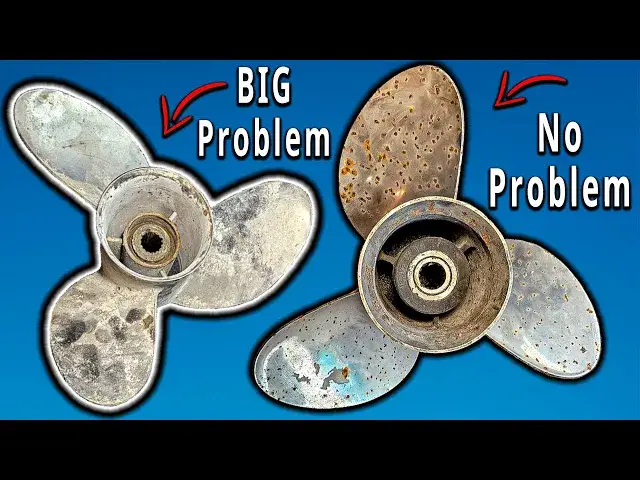
0:00
A dirty propeller can warn us of multiple things like electrolysis, galvanic corrosion
0:05
electrochemical corrosion, calcium buildup, salt buildup, cavitation damage, even a running issue
0:10
an oiling issue, or a thermostat problem. Did you know that if you have a twin-engine boat that doesn't have a ground cable between
0:16
the battery's ground circuits? You could see electrolysis eat away at one of the engine's
0:21
propellers or lower units and not the other one. And this is what is known as an
0:24
electrolysis issue. Now would that be something you might be interested in? Generally, where we've got some stray current coming
0:29
from somewhere and it's eating up the propeller because it's already gone through the engine's anode
0:34
Having the ground pass separated in the boat allows the current to eat the one engine
0:39
whether that's the propeller, lower unit, or other parts of the metal that are in the water and not the other engine
0:44
This can also happen if someone incorrectly makes electrical connections at the engine or at the boat
0:49
which allows the stray current to run through the engine and if you see one propeller that seems to be clouding up
0:54
pitting or discoloring, or the other components like the lower unit are getting eaten up and the other is fine
0:59
that's a pretty good warning that we've got an electrolytic or electrolysis issue with some stray current going on
1:05
Whether that be from a shore power issue Andrown issue or even anode issue on the engine
1:10
You see a discoloring in the prop because of a thing called electroplating which is basically a process of hydrolysis
1:16
Where we have charged electricity exiting one metal through the negative and entering the other metal through the positive
1:23
Leaving particles from the one metal to the other and discoloring the metal which might sound confusing but just remember
1:29
in DC power electrons are negatively charged and attracted to the positive side of the battery
1:35
So they flow from negative to positive So the color you see on the prop may vary depending on the exact issue you are having
1:41
If you notice that you have one propeller that seems to be looking cloudy dirty or maybe even hazy
1:47
And you have another engine where the propeller doesn't seem to be as dirty or it doesn't seem to be getting as cloudy as quickly
1:53
This could be a sign that the anodes on the lower unit and the trim bracket are no longer working properly whether they are deteriorated they have buildup on the anode blocking it from doing its job or even simply just aren there anymore Seeing this difference between your propellers is a little warning that maybe it time to check
2:10
out your anodes and make sure that they are still good. And this is actually more of what is going
2:14
to be called a galvanic corrosion issue. Basically, it's just what happens when you take dissimilar
2:20
metals, put them all together, use them as a common ground circuit, and then stick them in a highly
2:26
conductive substance like water. The metals are going to be trying to break themselves down
2:31
and this is what makes the anode so important because they protect the other metals
2:35
like your lower unit and your propeller, from being the metal that corrods first. However
2:40
if you are missing a bunch of paint from your lower unit, chances are that your lower unit
2:45
is going to be corroding and pitting before the prop simply because of the surface area available
2:50
and its aluminum, which is a more anotic or active metal than stainless. Now if you just see
2:56
rust on the propeller though, that doesn't really mean anything at all. It's actually probably more of a
3:00
sign of a lack of maintenance than an issue. Because this rust build up on the prop is going to be what is
3:05
called simple electrochemical corrosion, where the metal is simply deteriorating because it's a metal
3:11
that was created for minerals from the earth, and every single metal is always in a state of
3:16
electrochemically breaking down and deteriorating because it's metal. And the rust spots on the metal
3:22
are just simply surface rust and this deteriorating of the metal. So it's more of a question of whether or not it might kill you to give it a little clean
3:29
and polish every other decade if you could find the time. Oh, my theory whiskies
3:33
I'm late. I'm late. Now, just because you see some hazing on the propeller, though, doesn't necessarily mean that
3:39
you have an issue or that there is something wrong with the metal or the propeller
3:43
Certain climates, locations, and waters are going to have different mineral buildups to them
3:48
Take the Caribbean or the Keys, for example, because of the high water tem
3:52
the reefs and the other mineral makeups of the waters, you can find that you can take a brand new polished shiny stainless steel propeller put it in the water and just run it for one day the next day the propeller might be super hazy and look like it five years old
4:08
This is usually just a calcium buildup from the water. There's not anything wrong with the propeller or your engine
4:14
It's just straight up minerals from the water building up on the propeller
4:18
and in this case it's usually calcium. But in other locations, you can have high amounts of other minerals
4:23
salt or other stuff that will do similar things to the metal and make it look like you have a problem based on how dirty the propeller is getting even with minimal use
4:34
This will also double for salt buildup. A high salinity amount in the water will leave what will look like a layer of salt on the propeller
4:42
Again, there's nothing wrong. It's just the water that you're running in and the fact that it's a metal propeller
4:47
For both of these issues, you just need to clean the propeller off and that's it
4:51
Nothing more, nothing to worry about. Now if we start to see pitting, this could mean a whole other issue
4:58
If you see pitting on the propeller, a lot of times in cases where this is not an electrolysis
5:04
issue, this is caused by cavitation on the propeller, commonly first seen around the leading
5:10
edge of the propeller blades. But you can find it anywhere on the propeller blade based on the issue you are having
5:16
This is because a propeller cuts through water, you know, H2O, and the front of the propeller
5:22
has what is known as high or positive pressure. Then on the backside of the propeller, you have
5:28
negative or low pressure. The faster the propeller spins, the lower the pressure on the back
5:34
side of the prop prop becomes. And this basically makes the water on the front of the prop blade
5:39
boil instantly, which creates air bubbles that then implode instantly as they are thrown
5:45
off the propeller. This implosion of the air bubble is like a microc4 being set off on your
5:51
propeller, which creates all kinds of issues if left alone. Vibrations, running issues, and visible
5:58
warning signs to you such as little pinholes or pits that you can start to see on the prop Not really dirt but a problem nonetheless that warns you of something that is going on with your propeller and your engine So if you see that you have little potholes forming on the blades of your propeller you might look
6:14
into seeing if you have a cavitation issue going on with your propeller. Then probably the dirtiest
6:18
of all the signs is going to be where you find carbon buildup coming out of the exhaust of the
6:23
propeller. And this could be a good, a bad, or a doesn't matter either way type of warning sign
6:29
However, this is way more prevalent in two strokes where there was a lot of burned oil coming
6:34
out of the exhaust. There are many reasons to have carbon buildup in the exhaust
6:38
Seeing just a little is not bad, it's just what it is. If you have a little, you could probably see most of it clean away if you started using
6:45
some fuel additives to help clean out your engine, like Yamaha's ring-free or mercury's
6:50
quick clean, both of which are phenomenal products. As you see the carbon buildup though, this is a sign of a couple of different things
6:58
If you spend a ton of time idling or at low RPM, like, say, trolling, then this is going
7:04
to be normal because you are not getting the engine to heat up and burn the carbon off
7:08
Generally, carbon is just a buildup of an incomplete combustion of fuel and air, and on older
7:14
four strokes that has spent a lot of time idling or trolling, there could be a buildup on the
7:18
valves of the engine. This allows more carbon to exit the exhaust, and it will just start to accumulate out the
7:24
exhaust being the inside of your propeller. Now you're just seeing a heavier concentration of this buildup in the prop
7:31
This could also be a sign of things like a running issue where multiple different things
7:35
could be affecting it. A bad ignition coil, bad spark plug, stuck, dirty or clogged injectors, low or high fuel
7:42
pressure, all could be a factor when it comes to carbon buildup
7:45
But then, also, a stuck open thermostat could also make carbon buildup a thing
7:51
Seeing the engine will always be running cold and even more prominently in colder climates
7:56
with colder water temperatures. With a stuck open thermostat, you'll be running way too cold all the time
8:01
contributing to the carbon buildup and a dirty propeller that is trying to warn you of a problem