0:00
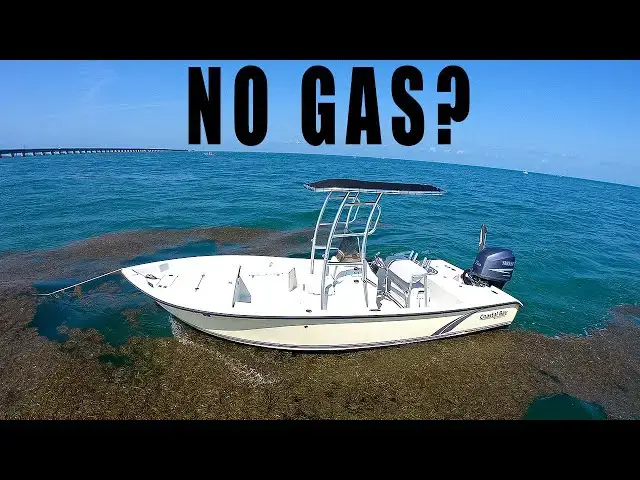
This is what an engine looks and sounds like when it runs out of fuel
0:18
Depending on where you are is going to determine the severity or the risk of the situation that you're in when you run out of fuel on the water
0:26
If you are offshore or say on a large body of water like one of the Great Lakes or Okachobi or on a river that is really remote and there's no one around, the dangers of this situation are way different than if you are on a river with a lot of people or a lake where there's not anywhere to go and you can get to shore
0:45
Depending on which situation you find you're in is going to be what you're going to do next
0:49
If you're offshore, the first thing that you're going to want to do if you have cell phone reception is call someone that can come out to you with gas or call
0:56
Seeto, Toboot US, or something like that. That way they can bring you gas. And as soon as you make
1:02
that phone call, now you need to start tracking your GPS location, start looking at your GPS
1:07
location and where the wind in the current is taking you. Because if you sit in the wind and current
1:13
in a half hours time, you could be a mile or a couple miles away from where you originally were
1:18
So if you called someone to bring you gas or you talk to Tobote US and you just told them where you are
1:24
30, 45 minutes later or two hours, three hours later, you're going to be miles away from that
1:30
position and they aren't going to be able to find you. So track that GPS location and be paying
1:35
attention to that pattern. And then immediately after that, what you're going to want to do is make
1:39
sure that your life vests are ready. I know not everybody likes to just get their life vests out and
1:43
put them on, so at least have them ready. Have a rope and the throwable there and make sure that
1:49
there's a life vest for every single person on the boat. If it's calm out and there's nothing going on
1:54
not everybody's going to want to put the life S on because the situation isn't that dire
1:58
But just in case you need to make sure that you know where the life S are and that everybody has one as well as a throwable and a rope so that way you guys can put a rope onto the boat in case the boat capsizes if you get in the golf stream whatever
2:13
That way that rope is on the boat and you guys can grab a hold of the rope and stay with the boat because if heaven forbid the boat flips over, you need to be able to stick with that boat because once you get away from that boat, you're going to be a lot harder to find in the worst case situation
2:30
if everybody is stuck on the boat and they've got a rope to hold on to and to keep everybody there
2:36
then you're going to be a lot easier to find if that situation ever happens
2:39
And then after that, what you're going to do is get on the VHF radio. You're going to start scanning around to see if you can find other boats that are chattering on the radio
2:48
and that way you can contact somebody if they're in the area to kind of let them know what's going on
2:53
and see if they can help you or anything like that. You can also get on Channel 16 where you can get in touch with the Coast Guard
3:00
very important that you let the Coast Guard know and someone else know where you're at and what's
3:05
going on. So that way, I mean, if you're offshore and it takes two to three hours for someone to get
3:10
out to you, a lot can happen in that time. If a storm starts to brew up, I mean, you get caught
3:16
into a storm or the wind picks up or you get into the Gulf Stream. If you've got no power
3:21
on your boat, that's a very dangerous situation because in the Gulf Stream or in the middle
3:26
of a storm and you have no control, the wind and the waves could flip the boat
3:30
or anything can happen. So it's very important that you have contact with somebody
3:35
to let them know where you're at, what's going on, and the track that you're on
3:39
based on your GPS location. You're also going to want to leave your engine all the way down
3:44
That way you can kind of control the boat. You know, once the current and the wind starts taking you
3:49
with the engine all the way down in the water, you still have basically a rudder
3:53
You can turn the engine left and right and can kind of steer the boat
3:56
So hopefully if the current's taking you in to land, you can kind of steer the boat
4:00
and be going towards a specific location and then letting someone know whoever you talking to whether that the Coast Guard Tobot US or your friends or whoever that way you can say hey I on this path and I steering this way and I should get to you know I be headed this way
4:17
That way, hopefully everything will go out smoothly and safely. Now, if you're on a river or a lake and there's people passing by
4:23
and it's not that dire of a situation where you're not worried about the weather, the boat capsizing, or anything like that
4:29
then you want to immediately get your anchor out and get yourself held into a position
4:34
That way you've got the boat there. Now, if you're close enough to the ramp or you're close enough to a ramp or a dock
4:40
what you can do is get everybody in the boat to move as much weight as you can safely to the back of the boat
4:47
So that way the boat is sitting like this in the water, that's going to make all the fuel
4:51
If there's fuel in the tank like this, if you tilt the boat back, all the fuel is going to go to the back like that
4:56
And now you might have enough gas with the pickup to be able to pick up fuel, get your engine started
5:02
and be able to slowly idle your way over to a dock or a ramp or something like that
5:07
That way, at least you're on land. So obviously you want to be careful about getting on other people's personal property
5:14
Don't just tie off to someone's dock and then start walking through their yard. You don't know who people are
5:19
You might end up getting yourself shot. So make sure that you are thinking about that as well
5:23
But that's just a good tip to think about if you've got enough fuel
5:27
And you know, depending on where the pickup is, you'll at least be able to maybe get over to the side, get out of a chance
5:32
channel or whatever you can get closer to shore that way someone can get out of the boat you guys can
5:36
get to a road go get fuel and bring it back now once you get fuel to the boat sometimes when a fuel
5:42
line goes completely dry it's not just going to prime up when you prime the primer bulb so you might
5:47
have to take the fuel line off of the primer bulb and then self-prime it by squeezing the prime bulb
5:52
putting your finger on the top of the primer bulb and then letting it go and self-priming it like that
5:58
until you get fuel into the primer bulb stick it back on to the other fuel
6:02
line and then be able to prime up the fuel system Now before you prime all that fuel all the way up to your engine you going to want to take your water separator off dump that out and inspect it You want to make sure that there is no water or any kind of debris in there because when a fuel tank runs completely dry if there any water in the tank
6:21
or there's any kind of debris or anything like that, once that stuff goes all the way down to
6:26
the bottom, it's where it's going to suck it up into the pickup and then get it into your water
6:30
separator. So this is the time before you prime it all the way up and fill that fuel all the way
6:35
to your engine, make sure you take that water separator off, dump it out, inspect it, because
6:39
you don't want to push a bunch of dirt, debris, and water up into your engine and then have
6:45
yourself problems with your fuel injectors or the screens on the fuel pumps or anything like that
6:50
that's on the fuel system on the engine. Making sure you have good clean fuel to the engine is priority
6:56
number one after you run out of fuel. Once you dump that water separator out, you also don't
7:00
want to just leave it dry and then try and go through because you'll have to reprim it. So a good
7:04
thing to do is fill that water separator up with fuel. If you can put a new one on, you
7:09
there that's gonna be best because when you take a water separator and you dump it out
7:13
all that dirt and debris goes out to it so then when you fill it back up it might be have all that
7:19
debris that's been catching on the one side might make its way over to the other side of the filter
7:25
because you've dumped it out like this and it's all ran down so you kind of want to use a brand new
7:30
separator but you know i understand that's not always going to be the case for everyone so just make
7:36
sure that when you put it on try and pre-fill that fuel filter or you're gonna have to prime it up because you've got a canister that's this big
7:44
You know you've got a canister that's this big that is all full of air. So that's a lot on the
7:50
fuel pump to be able to pull fuel and fill this thing up with fuel and take all that air
7:56
up into the engine's fuel system. So it's a good thing to pre-fill this with fuel if you do
8:02
once you at whenever you put it back on. And after all that now you have your fuel tank full of fuel again
8:07
primed all the way to your engine, so now you can start and run your engine and you will be good to go from here on out
8:13
Now, just make sure you pay attention to your fuel gauge, and if your fuel gauge doesn't work
8:17
then you need to watch this video over here that shows you how to fix your fuel tank sending unit