Up next in 10



Learn More About Your Boats Systems By Joining The Born Again Boating Academy! https://www.bornagainboating.com/
Get Your Born Again Boating Clothing! https://www.bornagainboatingshop.com
Get Savings On Boat Parts With BAB Coupons At Partsvu Here:
https://shareasale.com/r.cfm?b=1991037&u=3159438&m=119617&urllink=&afftrack=
Please Buy Anything From This Link To Amazon & Help Us Keep Bringing You Content!!!! https://www.amazon.com/?&_encoding=UTF8&tag=bornagainboat-20&linkCode=ur2&linkId=97bb1968e1ac47dfc3703d401d95fb5a&camp=1789&creative=9325
Join this channel to get access to perks:
https://www.youtube.com/channel/UCWZhbfXDCg7_PvlwvierP1A/join
Join this channel to get access to perks:
https://www.youtube.com/channel/UCWZhbfXDCg7_PvlwvierP1A/join
Subscribe To Our Podcast! The Boater's Podcast: https://www.youtube.com/channel/UC6Y2xnr23ERD2n_t51Jv4-Q?sub_confirmation=1
-------------------------------------------------------------------------------------------------------------------------------------------------------------
PARTS USED:
Epoch Batteries: https://2ly.link/1yj0G
-------------------------------------------------------------------------------------------------------------------------------------------------------------
DONATE
Show More Show Less View Video Transcript
0:00
I never really understood why people spend thousands of dollars more for a battery that
0:04
is more expensive, super temperature sensitive to the point that they will catch on fire
0:09
Fires caused by lithium ion batteries are on the rise. And not to mention that some would argue that they're worse for the environment to produce
0:16
compared to a normal battery. It's always sounded like a hoax to me. But how is it then that thousand dollar batteries have come to dominate the market
0:24
Are they really that much better? And why is it that we only ever hear what the companies want us to hear
0:29
Things like them being lighter and they last longer. I mean, does that really justify the price
0:35
I've been wondering this too, and that's why I've spent months researching this to try
0:41
and get the answers to these questions. And so that together we can understand the seemingly hidden truths about lithium a little
0:47
bit better by learning virtually everything that you need to know about lithium batteries
0:51
in one single video. Now let's start off by talking about the fire problem
1:06
There are three mainstream and common chemical makeups for the most popular EV lithium batteries
1:12
being lithium ion or lithium ion cobalt, lithium iron phosphate or LFP, and lithium nickel
1:20
manganese cobalt or NMC. Just straight lithium ion cobalt is losing popularity simply because LFP and NMC just
1:29
have more to offer in terms of power, safety, and longevity. NMC is a super popular type because it basically has more storage capacity, but is a lot more
1:39
susceptible to doing what is called thermal runaway. Thermal runaway is a chain reaction within a battery cell that occurs when the temperature
1:47
inside a battery reaches the point that causes a chemical reaction to occur inside the battery
1:53
And it's this thermal runaway that causes them to catch on fire, and can be very difficult
1:57
to stop once it has started, and it can even happen again later on to the other cells left
2:02
in the battery even days after it has already happened once. If these batteries are damaged in say a crash or any other form of physical damage to the
2:11
battery, they will catch on fire, and then the heat creates this thermal runaway
2:16
And that makes them hard to put out, and obviously more dangerous, whereas the next
2:20
most popular makeup is Lithium Iron Phosphate or LIFE PO4 or LFP
2:26
And this chemical makeup is much safer and doesn't catch on fire if damaged, though they
2:32
can still have thermal runaway, but it's like 97% less likely to happen from what I can find
2:39
Which is why it's the most common one for boating. Though a massive problem for lithium batteries is that for most of them, they will not accept
2:46
an alternator charge current, meaning that you can't simply put them in and charge them
2:50
like a normal lead acid battery. If you did, it can actually damage your engine's alternator or stator
2:56
Because lithium batteries use what is called a Battery Management System or BMS
3:01
This helps to not only make the batteries last a lot longer, but keeps them safer
3:05
With the downside being that the BMS basically prevents the battery from blindly accepting
3:10
charge current and controls the output of the battery. With the output being controlled by the BMS, this becomes a problem for the alternator
3:19
because the computer and the rectifier regulator on the engine are monitoring the voltage levels
3:24
that it sees from the battery. Based on what it sees, it tells the alternator to put out either more or less power
3:30
And it will have the alternator to continue increasing the output until it sees what it
3:35
wants to see voltage wise coming from the battery. If the engine doesn't stop the alternator from continuing to increase the output, you
3:43
can burn up the alternator or even have a fire hazard brewing on your boat
3:49
Now you can probably see where this becomes a conflict. Based on what the setup is for the BMS of the battery
3:58
And because of this complication, most engine manufacturers prohibit the use of lithium
4:03
batteries with their engines. However, this is usually only a concern for newer engines where warranty is a deciding factor
4:10
For older engines that have no warranty, you can do whatever you want with them because
4:14
there's no liability there for the engine brand and it's your property
4:18
This makes this video super important for you if you ever decide to invest your money
4:22
into a lithium battery to make sure that you don't burn up your alternator or start a fire
4:27
which is worth hitting that subscribe button. But as the technology continues to grow, companies like Brunswick, which owns Mercury and Relyon
4:35
being a lithium company, they have actually come out with specifications for lithium batteries
4:40
that are approved by the brand to use with their engines. Though they don't list specific brands that they approve, they at least have a spec sheet
4:48
of what they deem as okay to use with their engines and which models are able to use them safely
4:55
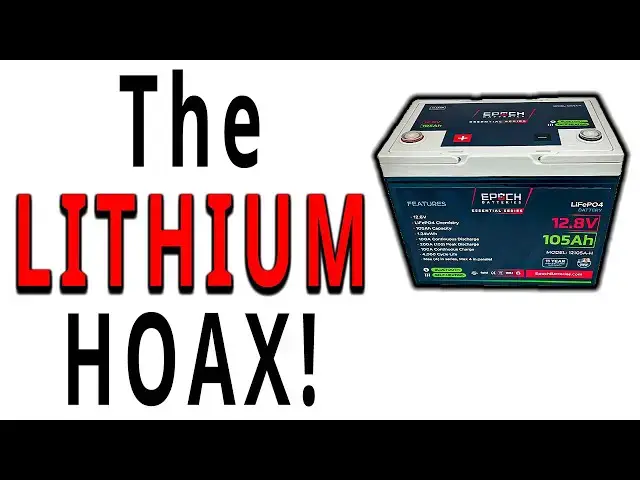
Like this epic dual purpose battery here, which meets all of these specifications and
4:59
has the BMS set up in a way that allows it to be used pretty much like a normal battery
5:05
and will accept the charge voltage from your engine. Though most engine brands are still in the process of laying out these specifications
5:12
and haven't yet publicly said what batteries won't void your warranty and which ones will
5:17
carefully remove those warranty void stickers without damaging them so that they can be reapplied
5:23
If you use a lithium battery as a start battery, you'll need to be cautious here based on your
5:28
engine and situation. Otherwise you will need something like a DC to DC converter in order to allow the engine
5:36
to charge your lithium batteries. And this just adds a whole nother level of complexity to your system when you're trying
5:42
to use a lithium battery as your engine's battery. This battery's BMS has that converter already built into it, but it's also why you can see
5:50
such a price difference between all of the tons of different lithium battery companies
5:55
that are out there on the market. Like this battery is $800 compared to a similar lead acid battery at like $200, $300, or even $450
6:06
Just remember if you buy cheap, plan on buying often. There's usually a reason something is way cheaper than something else
6:13
But we'll get into the longevity thing in a minute because another thing that we found
6:16
with lithiums is unlike lead acid batteries, they aren't rated the same
6:21
Most batteries have a CCA or cold cranking amps rating on the battery
6:26
And this rating tells us how many amps the battery should put out for 30 seconds at zero
6:31
degrees Fahrenheit, where lithiums don't usually have a cold cranking rating because the way
6:37
they discharge power is so much different from the way that a lead acid battery does
6:45
A lead acid battery will vary greatly in the amount of power it will discharge based on
6:50
its state of charge. Whether it's 100% charged, 75% charged, 50% charged, or on down the line
6:57
This is important because the amount of power that it will output is directly related to
7:01
how much it is charged. And its power output drastically declines and falls off as the battery is depleted
7:08
Like at say 100% charged, it might put out somewhere around 12.5 volts
7:12
Then at say 70%, it might put out somewhere around 11.5 volts
7:17
Then at 50%, it is just going to plummet downward on the amount of voltage it will put out
7:23
In comparison, a lithium battery has what is called continuous cranking amps
7:28
Because lithium can pretty much put out the same amount of power regardless of if it's
7:32
100% charged or 25% charged. So you could see a loss of like 2 to 2.5 volts from a lead acid battery solely based on its
7:40
state of charge. Whereas a lithium, you're going to see a fraction of a volt drop of the power being put out
7:46
whether it's charged 100% or even down to like 5% because of its constant available power
7:51
And so for the same size battery, the lithium is basically going to double the capacity
7:55
of power available compared to the lead acid battery, seeing that you lose power every
8:00
time you use the battery. Now this does come with the caveat of the outside temperatures because lithium can only
8:05
discharge power when the temperature is above negative 20 degrees Celsius and negative 4
8:11
degrees Fahrenheit. And they will only charge when the temperature is above freezing
8:15
Where the lead acid discharges at the same temperatures, but will still actually also
8:20
take a charge all the way down to negative degrees Celsius and negative 4 degrees Fahrenheit
8:26
This is important because it goes back to the safety factors of the BMS and making sure
8:30
that it's regulating those temperatures to prevent thermal runaway, as well as when it
8:34
will allow the battery to charge to assist in making the battery cells last longer
8:39
Most lithium batteries available are just simply deep cycle batteries right now
8:43
But with the introduction of the dual purpose batteries and the desire to use them as engine
8:47
cranking batteries because of their available power and the longevity, which we'll get to
8:52
this temperature issue can be a factor. Like our Epic battery here that has temp sensors built into the BMS, if it senses temperatures
8:58
below freezing and you're trying to charge it, it simply diverts that charge current
9:03
to heaters that it has built into the battery. And then once the temperature gets above like 40 degrees or something like that, it will
9:09
simply divert that charge power back to the battery cells and will return to charging
9:14
the battery as normal, which again is along the lines of the safety aspects of the battery
9:18
Now, when it comes to the issue of self-discharging, most of us have had the pleasure of learning
9:23
the hard way. What it means for a battery to simply self-discharge from just sitting and let acid batteries even
9:28
lose more power quicker the longer they sit. A lithium battery usually self-discharges at a rate of about 1 to 3% per month
9:38
So if you have a battery that is 100% charged and you let it sit for say 12 months, it will
9:42
still have about a 64% charge left in it compared to a lead acid battery, which will self-discharge
9:49
at a rate anywhere from 5 to 20% per month, unless you keep the battery on a trickle charger
9:55
If you let it sit for say seven or eight months, let alone 12 months, it will usually be dead
9:59
and unusable when you try to use it. But a lithium after 12 months with 64% charge, because it has that continuous power available
10:07
will still be usable with all the power that it can put out even at 64% charge
10:12
Not to mention that they will also charge about four times faster than the rate of the
10:17
lead acid battery. So you can charge it up completely in only a couple of hours as opposed to having to
10:21
wait sometimes a day or two to try and get a battery to come back to life and hold a
10:25
charge after it has been sitting for a while. And this brings us to the longevity aspect of things and an issue for the normal batteries
10:33
but actually an advantage to the lithium battery, being the cycle life that they each have
10:37
Now different people and companies have different definitions of what constitutes a cycle life
10:42
But what I've gathered is that most companies consider a cycle life to basically be when
10:46
a battery goes from 100% charged down to about zero to 20% charged and then recharged
10:52
Though some would say that that would be considered two cycles, having depletion being one cycle
10:57
and charging being another cycle. For simplicity sake, we're just going to go with the down to zero to 20% and back up as
11:04
one cycle life. Now for a regular lead acid battery, most of them have around a 200 cycle count life
11:10
This means that you can run this depletion cycle only about 200 times
11:15
Mind you, this is theoretical and will depend on the quality of battery that you have
11:19
More expensive batteries are going to have more of a 500 to 1000 cycle life count
11:24
This is probably why most lead acid batteries have a shelf life of only around two to five
11:29
years, whereas most lithium batteries start out with around a 2200 cycle life count
11:34
Most are in the 3500 count range and like our Epic cranking battery here has a count
11:39
of 6000 cycles. But that's why most lithium batteries have a shelf life of anywhere from 10 to 15 years
11:45
and most of them also come with a warranty for most of those years as well
11:49
I'm pretty sure this one has an 11 year warranty. Now because lithiums have that BMS built in and the more advanced the BMS, the longer
11:58
the stronger and more features you will get and most of them let you know what is going
12:03
on with the battery. Especially through Bluetooth, you can see the state of charge the battery has, the cycle
12:08
count, the temperature, how long it has until it's charged and tons of other stuff
12:13
Some of them will even alert you when the battery is getting low so you don't have to worry about draining the battery
12:17
Now then there is also that other deal of where they are much lighter compared to lead
12:21
acid and that's pretty much everything you need to know about lithium batteries
#Boats & Watercraft
#Hybrid & Alternative Vehicles
#Water Activities
#Boating
#Volvo
#Household Batteries